art that breathes political or a political
Political or A Political

I’ve been sitting with a question that keeps returning, quietly but insistently:
Is your art political?
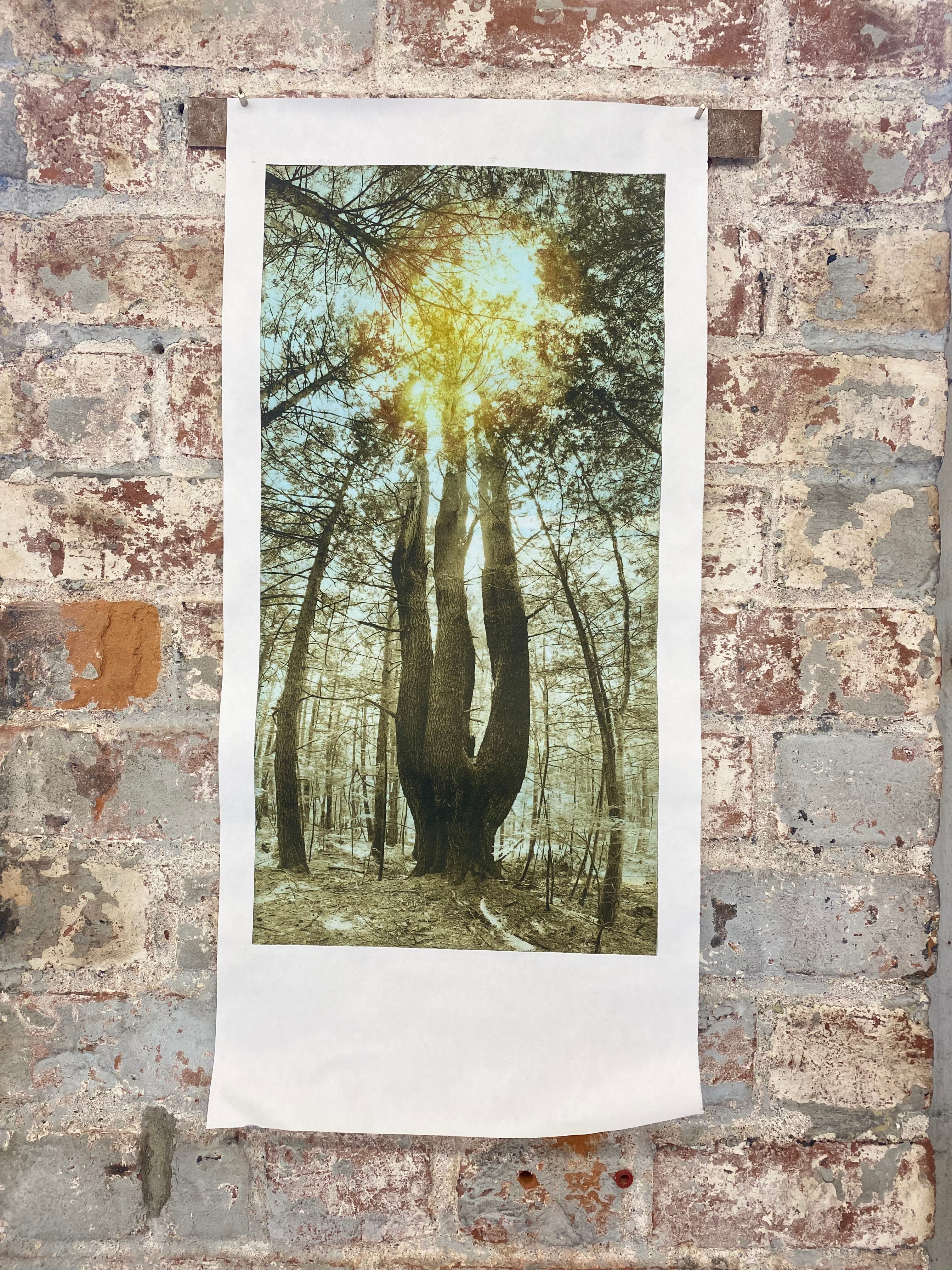
My answer is yes, absolutely yes, definitely yes, though not in the way we often expect politics to announce itself. No with slogans or memes or grand declarations, not with outrage or spectacle. For me it politics of attention. A politics of care. A politics rooted in beauty, usefulness, and the radical act of helping people fall in love with the world again.
We already know what is broken.
We already know what is devastating, heartbreaking, and unjust.
This week alone the news has rattled us again! The accumulation of it lives in the nervous system. (we can talk remedies another time!) Lucinda Williams’ “So Much Trouble in the World” says it plainly. There is so much trouble.
But I am not interested in only naming what is wrong. I am interested in what helps us stay. What helps us tend to the earth and to one another and what helps us imagine lives worth living inside this damaged world.
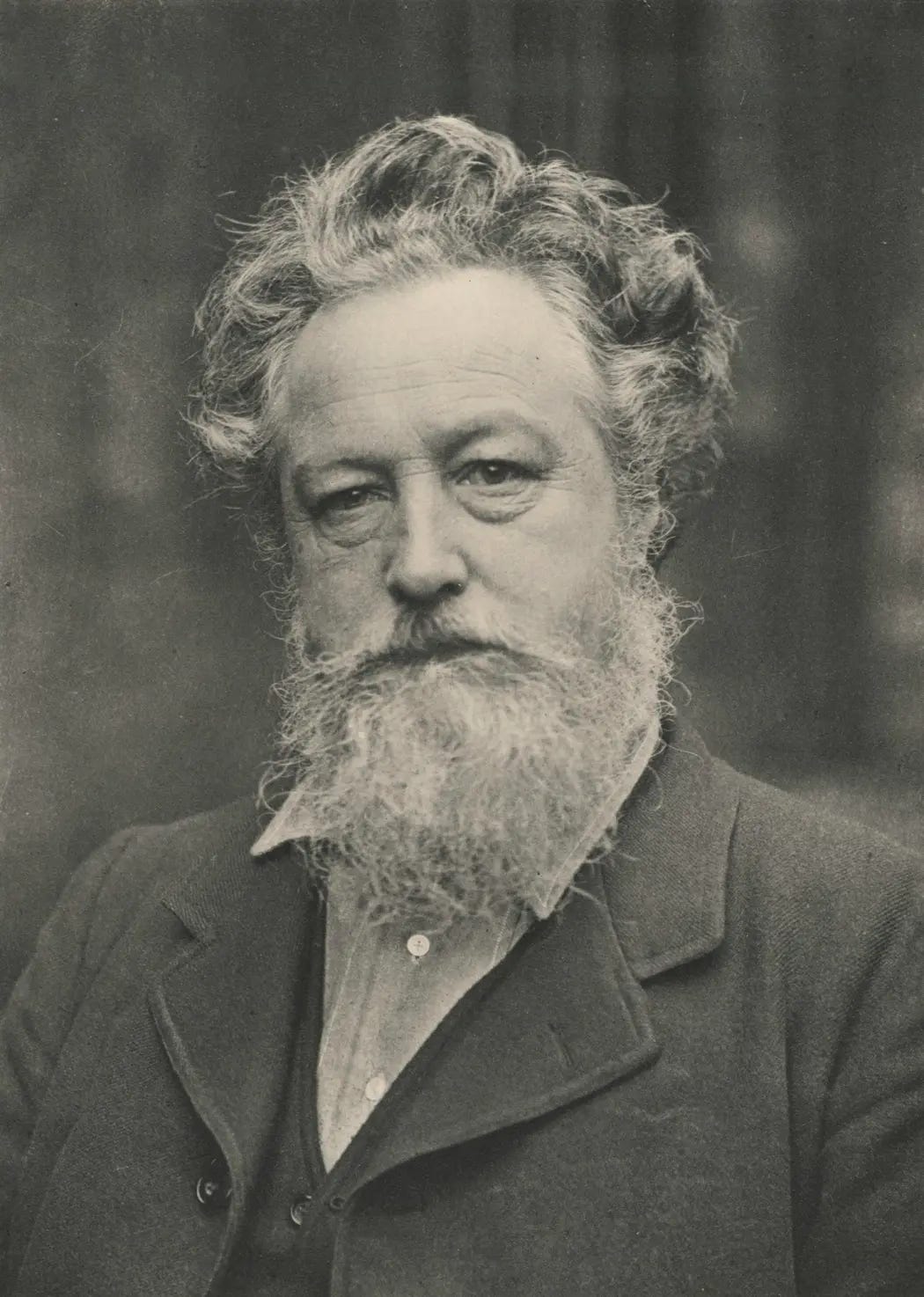
This is where I feel myself walking alongside the words and ideas of William Morris. I keep returning to his philosophy to transform the world with beauty. Morris believed that the conditions of our daily lives, our homes, our tools, our work, our relationship to land and labor, shape who we become. He saw ugliness not as a matter of taste, but as a social failure. Mass production, extraction, and alienated labor did more than exhaust bodies; they impoverished the spirit. This feels unmistakably evident in our present moment, where efficiency is prized over care and speed replaces intimacy. For Morris, beauty was not decorative. It was ethical.
“Art is the expression of man’s pleasure in labour,”
He wrote in a statement that feels almost subversive now, now, in a culture where productivity has eclipsed joy, and value is measured by output rather than meaning. Morris believed that when work is stripped of meaning and delight, something essential is lost, not only for the worker, but for society as a whole.
Morris insisted that art and life were inseparable. That beauty did not belong to an elite few, but to everyone. Art, for Morris, was not a luxury object or a marker of status, it was a shared social good, woven into the fabric of everyday life. This vision stands in stark contrast to much of today’s art world, where value is often tethered to scarcity, spectacle, and market validation rather than lived experience. Art is frequently abstracted from daily life, sequestered behind institutional language and economic barriers that determine who belongs and who does not. Morris offers another way; one in which art is not a commodity to be consumed by the few, but a shared practice that restores meaning, dignity, and connection to everyday living.
“What business have we with art at all unless all can share it?”
This question still rings.
Morris imagined a world where ordinary people lived surrounded by beauty. Where objects were made slowly, locally, with attention to materials and the natural world. Where usefulness and beauty were not opposites, but companions. His oft-quoted line still feels like a quiet manifesto:
“Have nothing in your houses that you do not know to be useful, or believe to be beautiful.”
This was never about minimalism or aesthetics alone. It was about refusing excess born of exploitation. About choosing relationship over accumulation.
In the 1880s, Morris threw himself into political organizing, public speaking, and writing, often at great personal cost. News from Nowhere his utopian novel depicting an idyllic, decentralized socialist future England (around 2102) after a revolution, where private property, cities, and class structures are gone, replaced by communal living, handicrafts, a deep connection with nature, and work done joyfully for its own sake, contrasting sharply with Victorian industrial society and offering a vision of a beautiful, egalitarian life was not escapism but was an act of imagination as resistance. He understood that if we cannot envision a different way of living, we will remain captive to the present one.
I feel that urgency now. We need to begin to see to imagine the future we want, one that is not dictated by a crazy man.
At this present moment in history as disillusionment runs deep and trust in politics and politicians feels fragile at best, a figure like William Morris offers something rare: renewal without cynicism. Reminding us that politics does not only live in institutions or elections, but in how we choose to shape daily life. When faith in systems erodes, Morris points us back to the ground beneath our feet:
to making,
to tending,
to beauty as a shared social good.
His vision insists that transformation begins with lived values,embodied in work, in care, and in the worlds we create together.
To teach someone to notice the curve of a leaf, the intelligence of plants, the way light moves across a wall at dusk, this is not apolitical. Morris understood the power of attention. He knew that when people are invited into intimacy with the everyday world, their desires begin to shift.
“The true secret of happiness lies in the taking a genuine interest in all the details of daily life.”
Attention becomes devotion.
Devotion becomes care. A
nd care changes what we are willing to accept.
Morris believed that we protect what we cherish, and that beauty trains us in cherishing. When people experience dignity, pleasure, and care in their surroundings, they begin to demand those qualities everywhere;in labor, in governance, and in relationship with the land.
This is the lineage I claim.
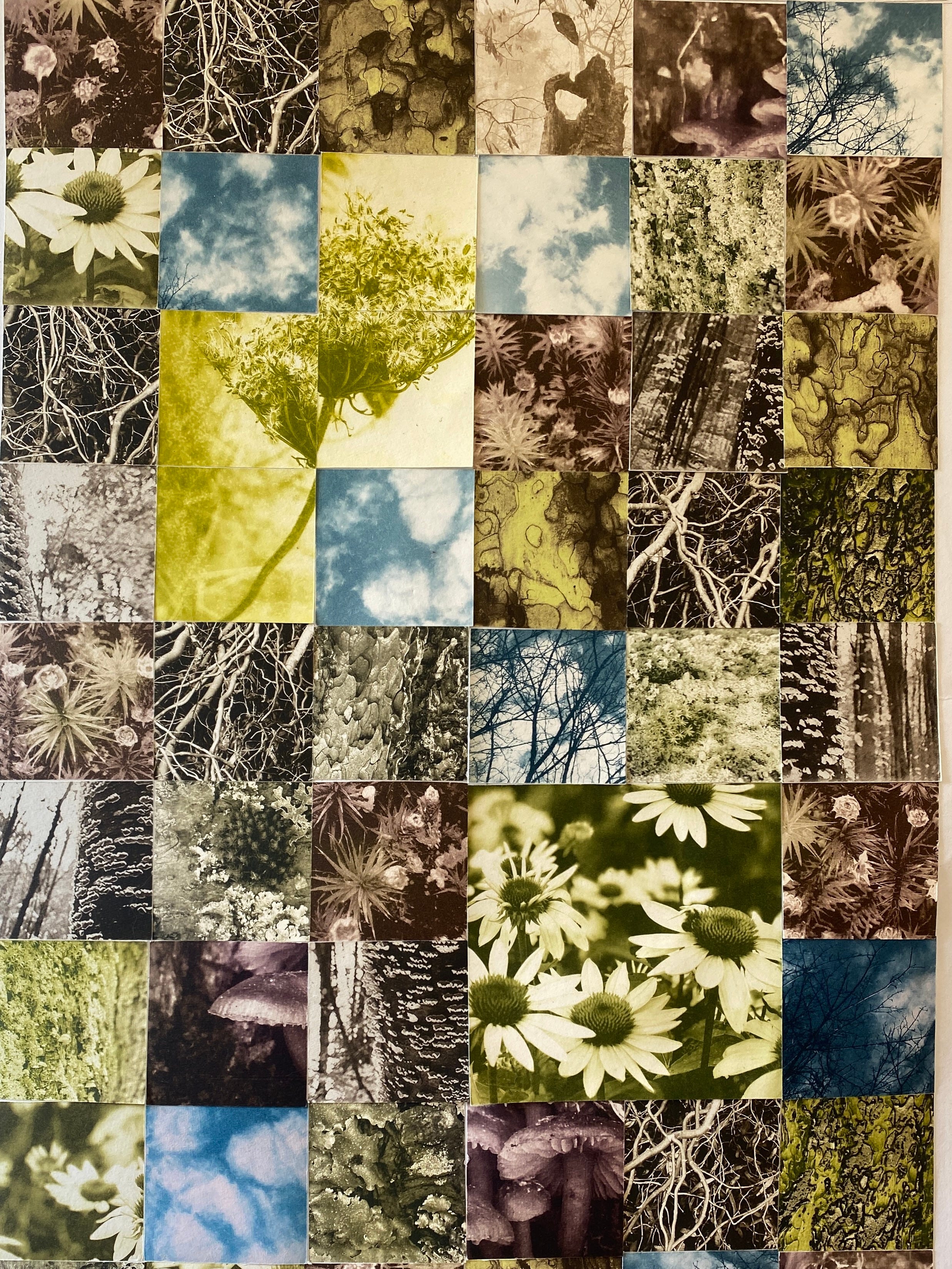
My work through teaching workshops in herbalism and art, moves slowly and deliberately. It resists extraction. It values process over product, intimacy over scale, reciprocity over mastery. Like Morris, I am less interested in grand gestures than in how we live, how we make, tend, notice, and belong.
This does not mean turning away from grief or injustice. Morris did not avert his gaze; neither do I. But he also refused despair as an endpoint.
“Fellowship is life, and the lack of fellowship is death,” he wrote. reminding us that connection, not isolation, is the ground of any livable future.
To choose beauty in a time of collapse is not naïve. It is a refusal to surrender our humanity.
If my art is political, it is because it asks us to slow down.
To notice.
To fall back in love with the living world.
And to practice, through small, ordinary, devoted acts, the future we long for.


The true secret of happiness lies in taking a genuine interest in the details of daily life
___________________________________________________________________________
On Interbeing- a recent project
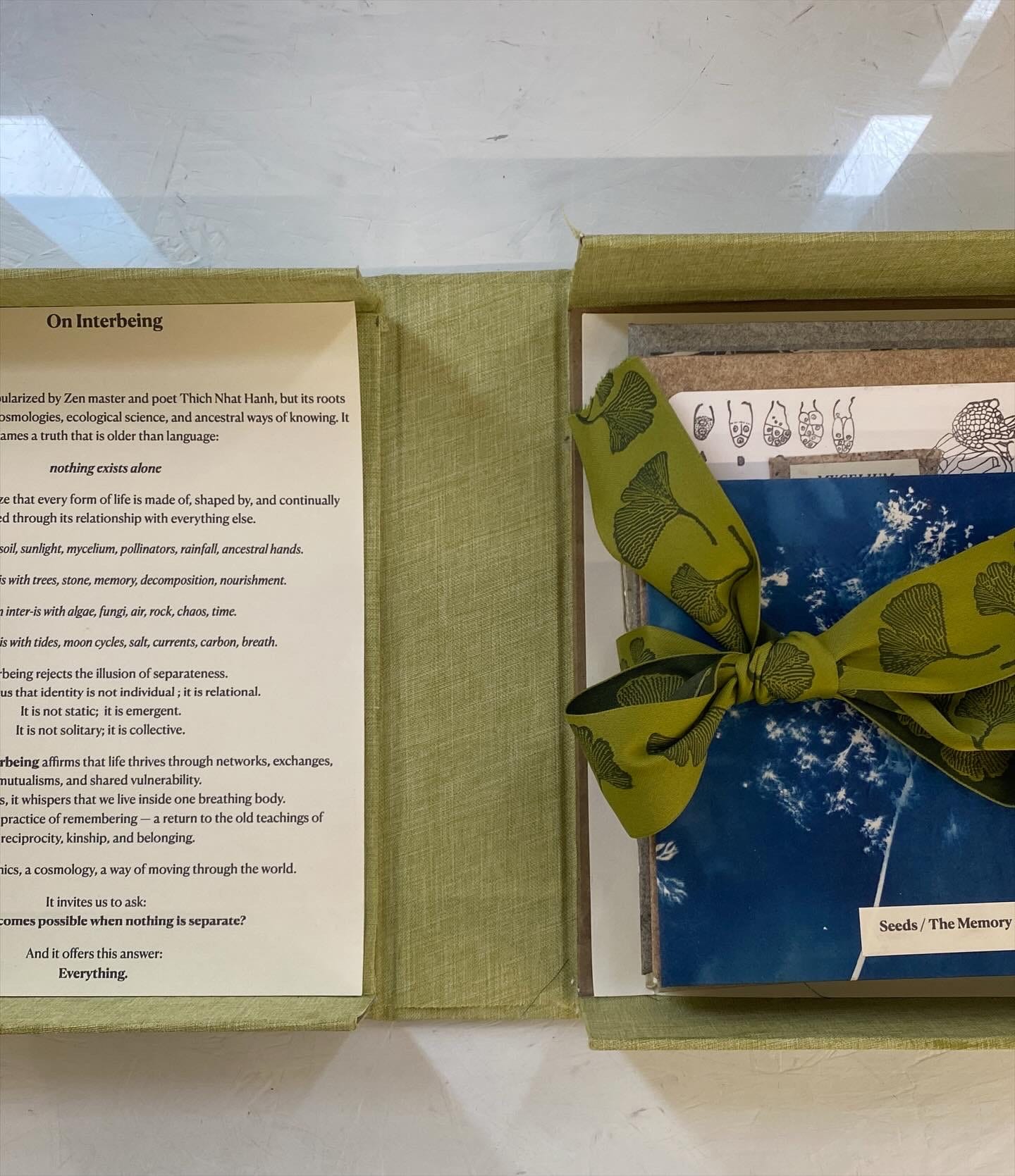
Interbeing: Four Studies in Connection
a boxed set of artist books by Tony(a) Lemos, (Edition of 10)
Interbeing is a term popularized by Zen master and poet Thich Nhat Hanh, but its roots echo across Indigenous cosmologies, ecological science, and ancestral ways of knowing. It names a truth that is older than language:
nothing exists alone
To inter-be is to recognize that every form of life is made of, shaped by, and continually nourished through its relationship with everything else.
A seed inter-is with soil, sunlight, mycelium, pollinators, rainfall, ancestral hands.
Mycelium inter-is with trees, stone, memory, decomposition, nourishment.
Lichen inter-is with algae, fungi, air, rock, chaos, time.
Seaweed inter-is with tides, moon cycles, salt, currents, carbon, breath.
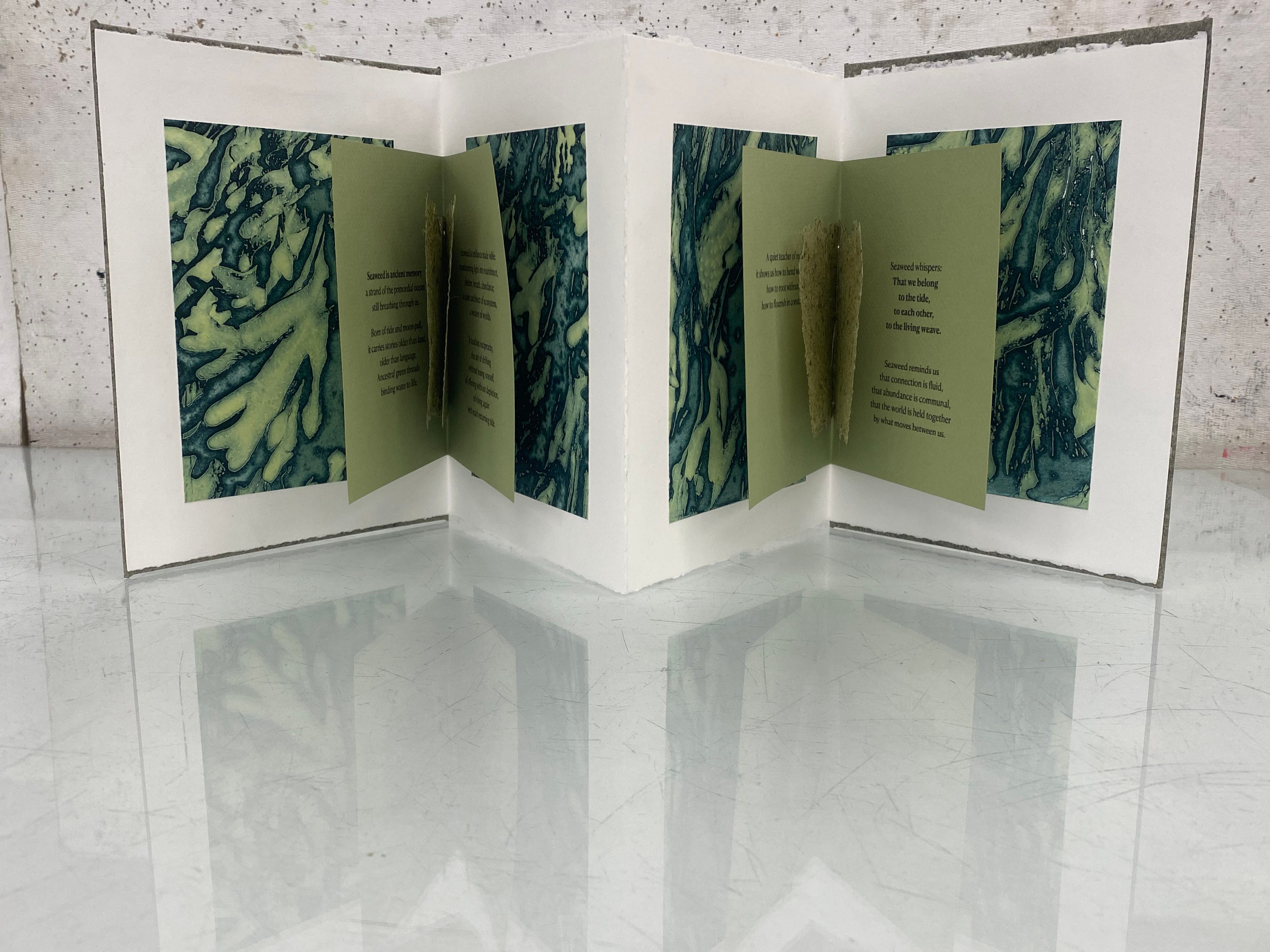
Interbeing rejects the illusion of separateness.
It reminds us that identity is not individual ; it is relational.
It is not static; it is emergent.
It is not solitary; it is collective.
In ecological terms, interbeing affirms that life thrives through networks, exchanges, mutualisms, and shared vulnerability.
In spiritual terms, it whispers that we live inside one breathing body.
In cultural terms, it is a practice of remembering — a return to the old teachings of reciprocity, kinship, and belonging.
Interbeing is an ethics, a cosmology, a way of moving through the world.
It invites us to ask:
What becomes possible when nothing is separate?
And it offers this answer:
Everything.


If you are interested in purchasing Interbeing Artist Book please contact me.
(Each individual volume seeds, lichen, mycelium, seaweed each costs $50 and one of the 10 numbered boxed set $300)
inspiring words today-thank you. laurel
Fantastic, I couldn’t agree more. Thank you so much for your (and William Morris’s) timely thoughts. all the best, Rachel